Jack stood on his packaging workshop floor at 7:45 a.m., watching three operators scramble to align cardboard sheets on an aging assembly jig. One misaligned blank, one uneven glue bead—and the entire batch of 200 premium gift boxes would be rejected by the client. This scenario plays out in thousands of small-to-midsize packaging shops every morning. The question isn’t whether you’re losing money to manual processes; it’s how much.
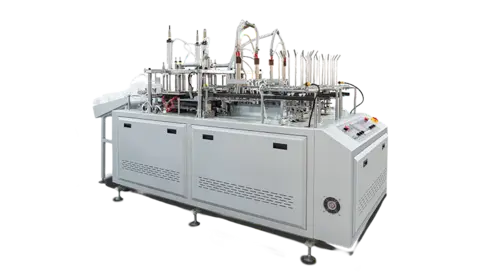
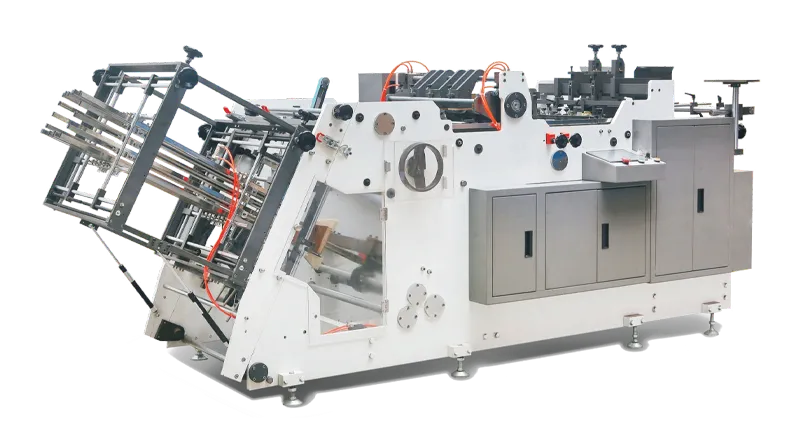
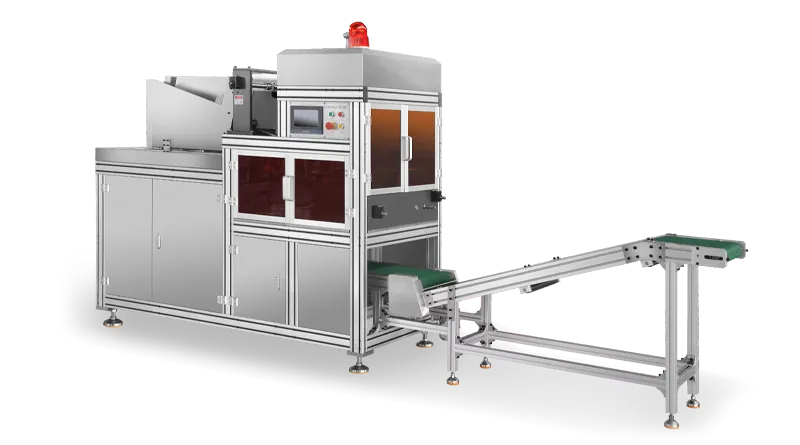
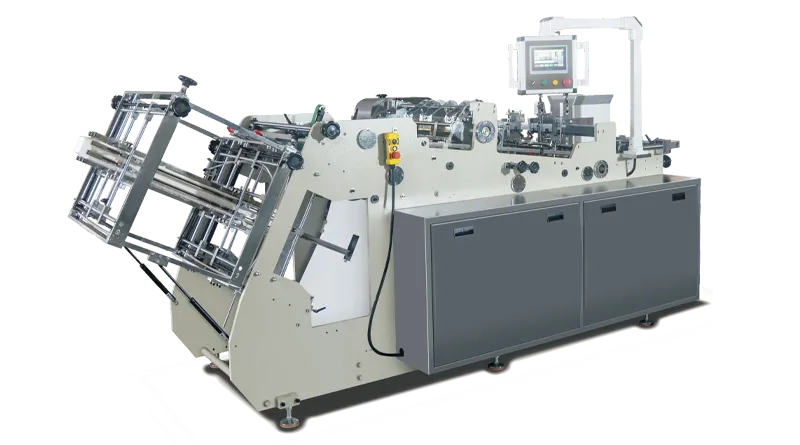
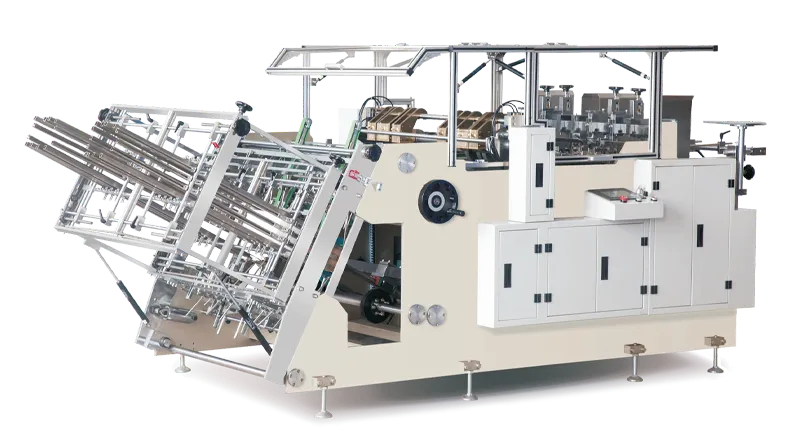
When every minute of downtime chips away at already thin margins, the search for repeatable speed leads many converters toward integrated forming and gluing systems that take the guesswork out of box production. These aren’t just faster machines—they represent a fundamental shift in how a packaging line absorbs variety, scales output, and delivers consistent quality without heroic operator intervention.
To understand why automation matters, we first need to look at what conventional processes actually cost—not just in capital, but in operational waste. The Packaging Machinery Manufacturers Institute (PMMI) reported in a 2023 industry survey that manual rigid box assembly operations can generate up to 12% material scrap from misalignment and glue overflow alone. That’s twelve out of every hundred sheets going straight into the recycling bin.
Beyond scrap, three other pain points consistently surface when we analyze production data from mid-tier packaging converters:
Labor dependency and training drift. Skilled box assemblers are increasingly hard to find, and when they leave, their tacit knowledge walks out the door. New hires often take weeks to reach 80% of target speed, and during that ramp-up, rejection rates spike.
Micro-stoppages from changeovers. Even a conventional semi-automatic paper box making machine typically requires 20–40 minutes for a full format change. If you’re running four different box sizes per shift, you could lose over two hours just to mechanical adjustments.
Inconsistent glue application. Manual or pneumatic glue systems rarely maintain uniform bead profiles. The result? Weak corners, aesthetic defects, and occasional field failures that hurt your brand.
These aren’t just inconvenience—they’re structural limits. A plant manager we spoke with in the Midwest put it bluntly: “We were running our crew at 110% and still missing shipment dates. The math just didn’t add up anymore.”
Automation in box production doesn’t merely speed things up; it removes the variables that create variation. Here’s where the measurable gains come from.
Modern automated lines use multi-axis servo motors to control forming, folding, and pressing with positional accuracy down to ±0.1 mm. This means the 100th box is exactly the same as the first. For converters producing luxury rigid boxes with wrapped inner liners, that consistency directly correlates with brand perception and reorder rates. One European cosmetics packaging supplier documented a 40% reduction in customer returns after upgrading to servo-controlled cell layouts.
Instead of manually adjusting guides, cams, and glue nozzles, operators load a pre-saved recipe on a touchscreen. The machine repositions all relevant axes automatically in under three minutes. Modern box production modules with recipe-driven setups now let you switch from a phone case box to a chocolate tray without touching a wrench. For shops juggling 10–15 SKUs weekly, this single capability often recovers 15+ hours of productive time per month.
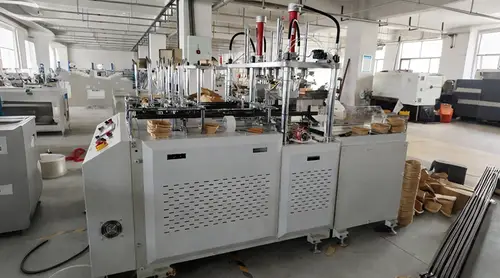
Vision inspection stations integrated at the gluing and pressing stages can flag misalignment, insufficient glue coverage, or surface contamination in real time. Defective units are automatically ejected before they reach the packaging station. According to ISO 12647-7 quality guidelines for packaging, inline optical inspection systems can detect deviations as small as 0.15 mm—well below the threshold visible to the human eye on a fast-moving line.
Automated processing devices aren’t isolated mechanical systems; they generate log files on cycle times, stop causes, temperature profiles, and motor torque. When fed into an MES or ERP system, this data reveals patterns that were previously invisible. One converter discovered that 70% of its unplanned stops occurred during the final turn-in stage on specific board grades. With that insight, they tweaked the folding finger geometry and eliminated the bottleneck entirely.
| Factor | Manual Assembly | Conventional Semi-Automatic | Automated Processing Device |
| Output rate (avg. rigid box) | 2–5 units/min | 8–15 units/min | 20–35+ units/min |
| Format change time | 10–15 min | 20–40 min | <3 min (recipe-based) |
| Material waste | 10–12% | 6–8% | <0.8% |
| Operator requirement | 3–5 per line | 2–3 per machine | 1 per cell |
| Quality data collection | None | Manual logs | Automated, real-time |
Data based on field observations and converter interviews, 2024.
The numbers tell a clear story, but the more subtle benefit is organizational. When you remove repetitive adjustment tasks from operators, you free them to supervise multiple cells, handle complex custom orders, or focus on preventive maintenance—tasks that add far more value than tweaking a glue nozzle every 20 minutes.
One legitimate fear among smaller converters is that automation means a million-dollar machine that only makes sense for giant runs. That hasn’t been true for several years. The rise of modular platforms means you can start with a standalone automated forming station and later integrate a gluing unit, a wrapper, and a stacker as demand grows. IoT-ready box manufacturing cells can be phased in gradually, protecting cash flow while building toward a fully connected line.
When evaluating options, focus on these four criteria:
Format flexibility – can the system handle the full range of box dimensions, board thicknesses, and styles you actually sell?
Recipe storage capacity – unlimited recipes or a hard limit?
Service architecture – are critical components (glue valves, belts, sensors) standardized and available from multiple suppliers?
Remote support capability – does the OEM offer VPN-based diagnostics to minimize downtime?
If your current setup is becoming a ceiling rather than a floor, it might be time to look beyond individual machine specs and evaluate the entire process architecture. Forbona has focused specifically on rigid box and carton automation, building modular platforms that can be tailored to high-mix, medium-volume environments—the exact scenario where traditional high-speed machines or manual labor both fail to perform optimally.
Their system design philosophy emphasizes quick format changes, transparent maintenance dashboards, and phased scalability so that you don’t have to bet the company on a single capex decision. If you’d like to see how a fully integrated cell could map onto your current floor layout and product mix, you can explore Forbona’s rigid box automation solutions and request a process review.
The converters thriving today aren’t the ones with the cheapest labor—they’re the ones who realized that repeatable processes and data-driven adjustments are the only sustainable competitive advantage in modern packaging production.

Key node quality report push
Equipment performance test report
Old equipment upgrading program
Lifetime technical support
Professional engineers 1 to 1 program design