Every morning, Mark, the production manager of a mid-sized rigid box plant in Ohio, stares at two numbers on his dashboard: raw material costs trending up, and the unit price his biggest client is willing to pay trending flat. He’s not alone. In conversations with dozens of packaging manufacturers, one refrain keeps surfacing—how do you take real cost out of the daily process without compromising the finished look that luxury brands demand?
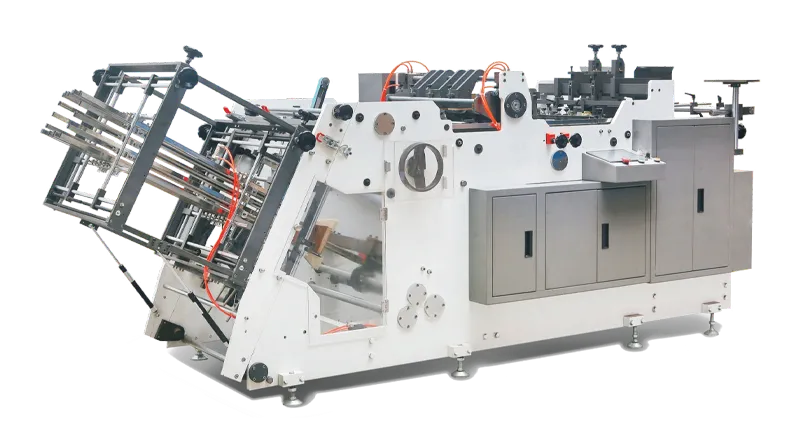
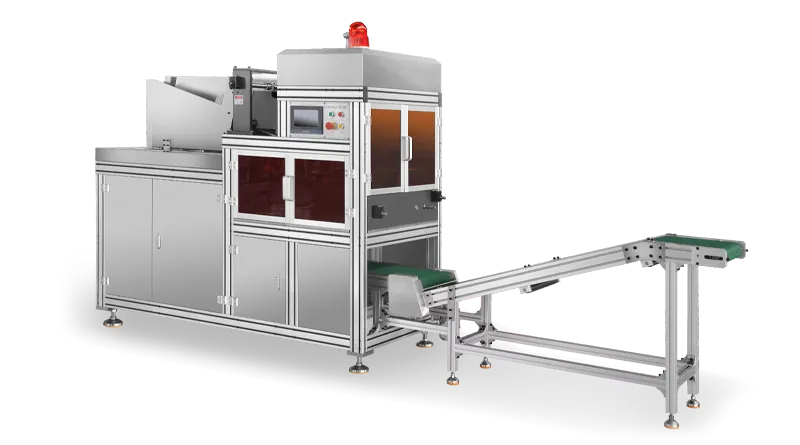
The answer, as we’ve observed across high-mix, low-volume facilities, rarely lies in a single silver bullet. It accumulates from rethinking waste, motion, and conversion efficiency. And more often than not, the right equipment platform plays an outsized role. For operations moving beyond semi-manual assembly, solutions for automated rigid box production can reset the baseline for what’s considered “normal” scrap and throughput. But before any investment, let’s break down the operational levers that actually move the needle.
Walk through any converting facility, and you’ll see three types of waste that rarely appear on a standard P&L but chip away at margin every single shift:
Skeleton waste from imprecise sheeting. Even a 2mm deviation per blank, multiplied by 50,000 units a day, becomes a silent profit killer.
Motion waste from manual material handling. Operators walking back and forth to align paper, feed blanks, or stack finished boxes accumulate non-value-added time that inflates unit labor cost.
Quality-rework loops. When lid-to-base fit isn’t consistent or glue lines show variation, the sorting and rework station becomes the busiest spot in the plant.
A 2023 benchmarking report by the Converting & Packaging Association (CPA) indicated that top-quartile performers keep total process waste—including trim, setup, and rework—below 4.7%, while median plants hover around 8-12%. That gap, for a modest operation, can easily represent 80,000to80,000to150,000 a year in pure material that ends up in the baler.
The most sustainable way to reduce material cost isn’t negotiating another half-percent off the board price; it’s making sure more of the board you purchase actually leaves the dock as product. This requires:
Registration accuracy under acceleration. When a machine ramps from 0 to full speed, tiny positioning drifts create oversized trim allowances. Modern servo-driven feeders maintain alignment dynamically, allowing the nesting layout to tighten. We’ve seen plants reclaim 3-5% of raw material simply by migrating from mechanical registration to closed-loop digital control.
Kiss-cutting and creasing precision for complex structures. Rigid boxes with wrap-around designs, inner trays, and magnetic closures demand fluted or laminated substrates be creased within tight tolerances. If crease depth varies by more than 50 microns, corner splitting or tearing increases, forcing overproduction to compensate for QA rejects.
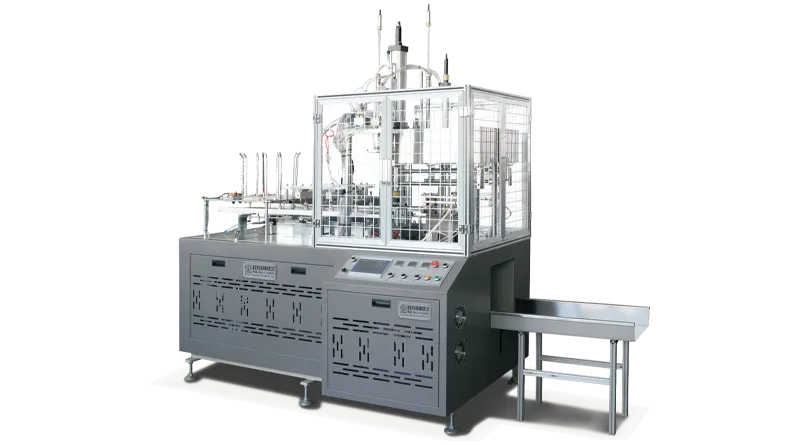
For converters struggling with tray corner splits or inconsistent folding, flexible carton forming equipment with adaptive pressure control can help eliminate the overcompensation buffer that silently inflates board consumption. One plant in the Midwest documented a 6.2% reduction in greyboard usage within three months of upgrading its forming station.
Skilled box makers are harder to find and retain. When a veteran operator retires, the tacit knowledge of how to finesse a tricky substrate or adjust for humidity goes with them. The immediate instinct is to automate, but the smarter play is targeted automation—identifying which specific motions and decisions consume the most human hours.
In a typical manual rigid box line, operators spend approximately 40% of their cycle time on positioning materials—aligning printed wraps, centering board on the base, manually feeding corner stays. By automating just the positioning sequences (rather than full lights-out operation), several shops have reduced direct labor per box by 35-50% while keeping the “craft” steps where human touch adds perceived value, like final inspection and tissue insertion.
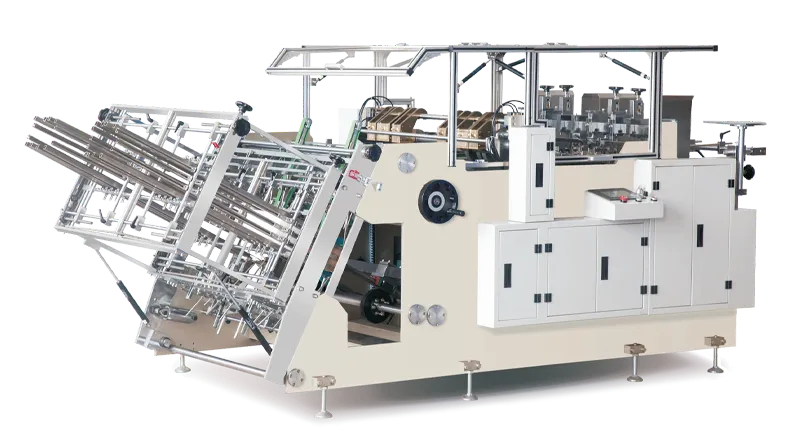
This is where modular box forming systems with intuitive recipe management change the equation. When changeover from a 6×6×2 inch gift box to a 9×4×3 inch drawer box can be completed in under 10 minutes by a single operator following a stored digital recipe, the batch-size flexibility doesn’t carry a labor penalty. The equipment acts as the “memory” of the process, reducing reliance on individual operator experience.
When budgets tighten, preventive maintenance is often the first line item deferred. Ironically, that decision creates the most expensive form of cost—unplanned downtime. A critical fact most shops miss: on a single-shift basis, even 98% uptime means roughly 4 hours of unscheduled stops per month. At peak season, when every hour of production counts, one major mechanical failure can erase the margin of an entire quarter.
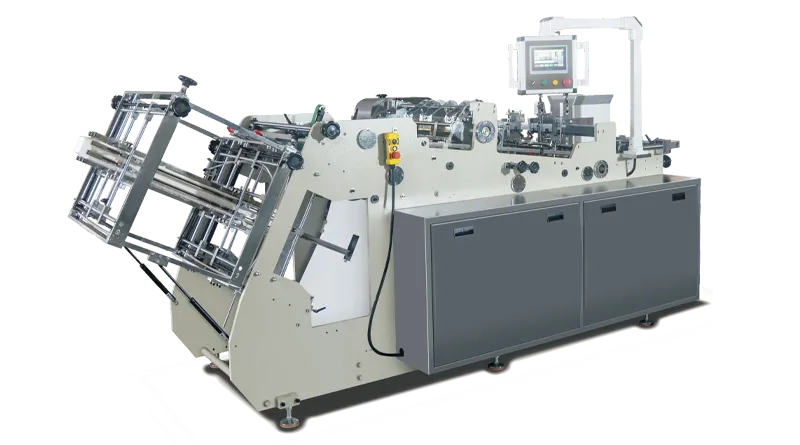
A paper box making machine that incorporates condition-monitoring sensors—tracking bearing temperatures, belt tension drift, and lubrication intervals—gives the maintenance team something more valuable than a calendar-based checklist. It provides leading indicators. For instance, a 0.8°C rise in a main drive bearing, if caught two shifts early, prevents a catastrophic race spalling that would sideline the line for 48 hours while waiting for a replacement part.
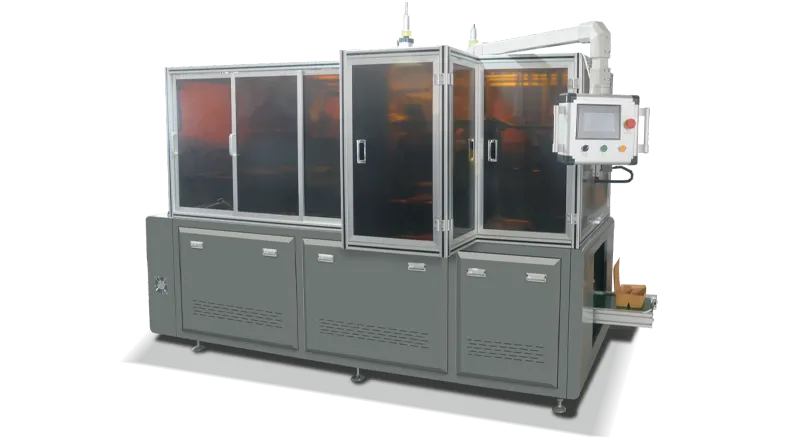
Plants that adopt predictive maintenance practices, according to a 2024 McKinsey Operations paper, report 20-25% lower maintenance costs and up to 30% reduction in downtime compared to facilities running reactive strategies. This isn’t theoretical—it’s a direct contribution to cost per unit.
Custom packaging manufacturers live in a world of repeat jobs with slight variations. Yet without systematic data capture, every repeat order is treated as a brand-new setup. The resulting trial-and-error uses precious sheets, minutes, and operator focus.
Enabling even basic operational data logging—cycle times, setup durations, scrap per job—creates a feedback loop. Production managers can compare actual performance against quoted standards. When a specific SKU consistently exceeds quoted labor hours, it flags either a quoting error or a process inefficiency that can be directly investigated. Over time, the plant’s cost knowledge becomes granular, down to the job level, which strengthens future quoting accuracy and protects margin.
When evaluating a new paper box making machine, asking the supplier about recipe storage, job-level reporting, and OEE tracking capabilities isn’t a secondary consideration—it’s central to the long-term cost structure. A machine that outputs 20 boxes a minute but provides zero operational data may actually cost more to own than a slightly slower platform that gives you the visibility to eliminate recurring issues.
The strategies above—tightening material yield, automating targeted positioning steps, shifting to predictive maintenance, and capturing job-level data—don’t require a greenfield factory or a capital budget that triggers board-level approval. They do require a willingness to view equipment not as a depreciating asset, but as the core platform that determines your daily cost baseline.
This brings us to the reality of implementation. A paper box making machine chosen purely on cycle-rate specifications, without evaluating how it handles quick changeovers, material variance, and data feedback, often ends up amplifying the very cost problems it was meant to solve. We’ve seen too many well-intentioned upgrades become expensive islands of automation that still rely on manual workarounds for 20% of the job mix.
If you’re mapping out a path to systematically lower your cost per box—whether you’re battling material waste in the wrapping stage, struggling with labor consistency across shifts, or trying to make predictive maintenance work in practice—it’s worth exploring Forbona’s approach to cost-efficient carton manufacturing. The conversation shifts from “how fast can it run” to “how efficiently can it run my actual mix.” And that’s where durable margin improvement lives.
Ultimately, cost reduction in packaging manufacturing isn’t about cutting corners. It’s about eliminating the hidden pockets of waste that accumulate when process and equipment drift apart. The plants that thrive in today’s market are the ones that have made the choice to bring them back into alignment—one box at a time.
Disclaimer: All industry data cited is sourced from publicly available reports and is provided for informational purposes. Individual results will vary based on product mix, operator training, and facility conditions.

Key node quality report push
Equipment performance test report
Old equipment upgrading program
Lifetime technical support
Professional engineers 1 to 1 program design