Walk through any corrugated or folding carton plant on a busy shift, and you’ll notice the same costly ritual: a forklift moving stacks of misprinted sheets, badly creased blanks, or glued cartons with off-spec gaps toward the baler. The anecdotal evidence is loud, but the numbers are even louder. According to a Smithers report on converting waste streams, the average box plant loses 8% to 12% of incoming substrate as process scrap before a single acceptable carton leaves the dock. In a mid-size operation consuming 15,000 tons of board per year, that’s easily over a million dollars in fiber that never turns into revenue.
The instinct is often to blame operator error or poor incoming board quality. Root-cause analysis, however, usually traces the bulk of avoidable waste back to a handful of mechanical and control weaknesses that repeat job after job. Fix those systemic weak points, and waste stops being a cost of doing business — it becomes a metric you can drive below 3%.
This article breaks down the three heaviest waste drivers in carton manufacturing and the process engineering steps that are helping converters hit sub-3% scrap rates. Along the way, I’ll highlight where a fresh look at your converting machinery can unlock gains that no amount of operator training will deliver.
When a line’s overall scrap rate sits stubbornly at 10%, the knee-jerk response is to scrutinize the die-cutter. That’s half right. By weight, most waste does exit at the die-cutter and the folder-gluer, but the root cause frequently originates in the feeder, the print units, or the interface between them. Four interrelated hotspots account for roughly 80% of process scrap, based on data aggregated from over 40 carton plants:
Registration drift during acceleration and splice events – Every time a new reel is spliced or the line ramps up, transient misregistration produces dozens of out-of-spec sheets before a human can intervene.
Creasing-pressure inconsistency across the sheet width – Uneven nicks and cracked scores generate tearing at the folder-gluer and drive blank rejection upstream.
Adhesive pickup variation on high-speed straight-line gluers – Starved or excessive glue patterns create open joints or squeeze-out, both of which turn finished cartons into scrap.
Ghost scrap from manual sorting and hand stripping – Relying on operators to spot and cull defective blanks introduces fatigue errors and often discards borderline-good pieces that a sensor would have passed.
Each of these problems has a machinery-level solution. Crucially, the most effective fixes don’t just harden one station — they tighten the data flow between stations so the line behaves as a closed loop.
A conventional line treats the feeder, print units, and die-cutter as isolated islands. The feeder pushes board at a set speed, the print units register to a mark, and the die-cutter does its best to chase any remaining drift. When the substrate slips or the mark sensor gets dirty, the gap between stations fills with reject sheets.
A fundamentally different approach is servo-driven, mark-to-register synchronization that reads the position of every sheet entering the die section and micro-corrects the platen timing in real time. Instead of hunting for a print mark after the fact, the system predicts the sheet’s arrival and positions the die so precisely that horizontal registration errors stay within ±0.15 mm (0.006 in), even during splice-induced tension bumps.
One independent test by an Australian packaging group found that after retrofitting a line with a closed-loop registration system, splice-related setup scrap fell by 2.7 percentage points, equivalent to roughly 80 fewer tonnes of waste annually on a single shift. That’s board that never had to be purchased, handled, or baled.
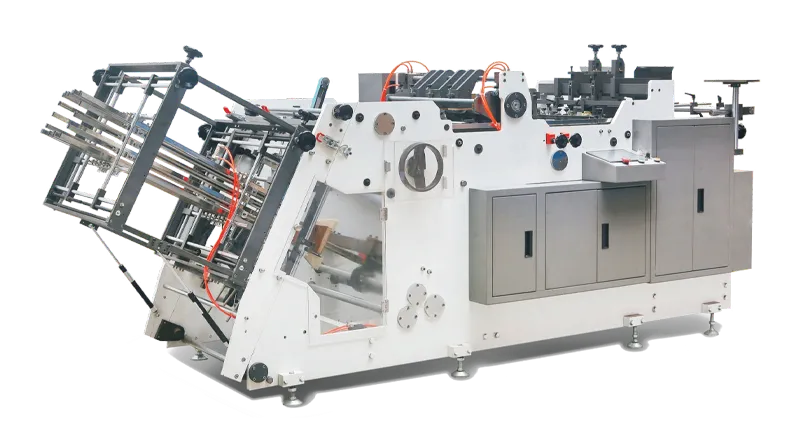
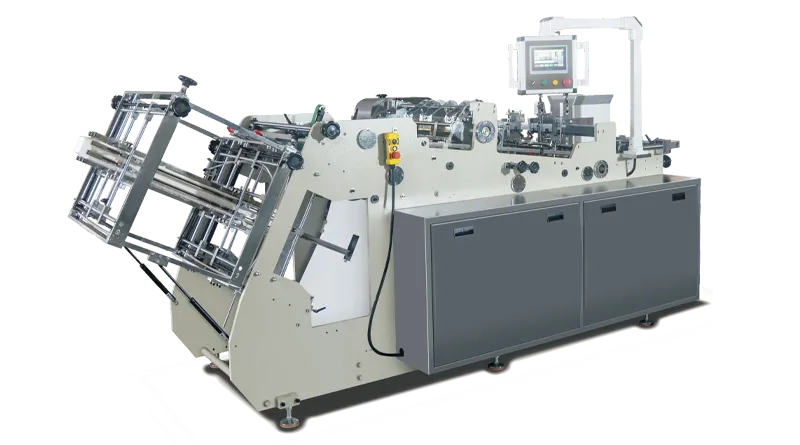
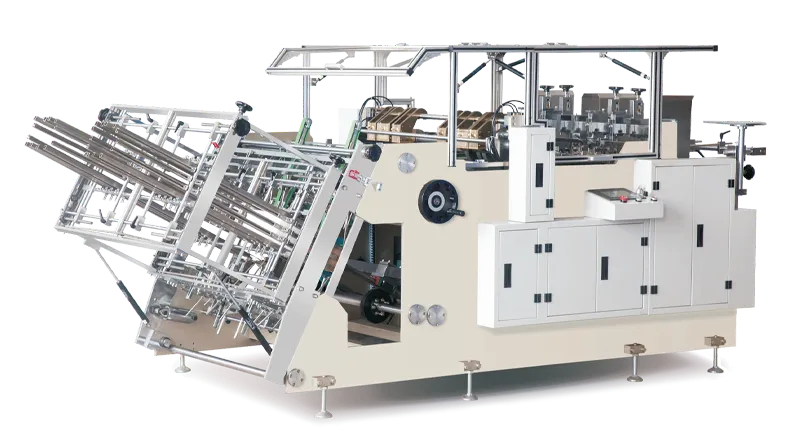
For converters mapping out their next capital improvement, evaluating an automated folding carton production unit with integrated servo registration is often the highest-ROI first step.
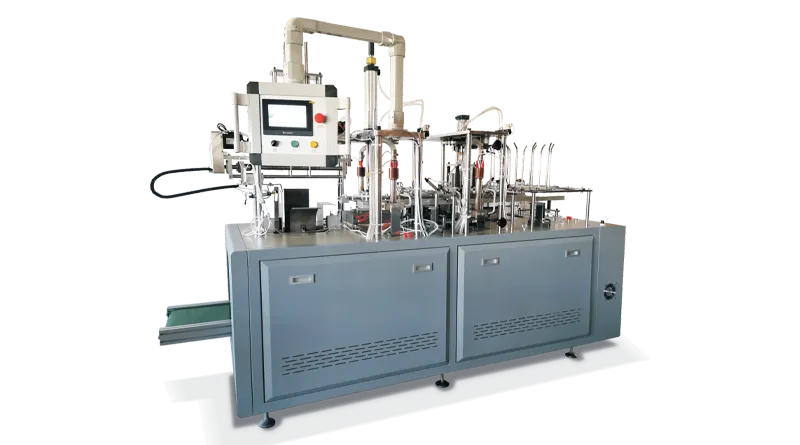
Many plants set creasing channels and counterplates based on a once-a-year trial, then trust the tooling to maintain that setting indefinitely. But board caliper drifts by season, platen wear alters pressure distribution, and different batches of the same paper grade can require measurably different creasing forces.
Top-performing plants now treat creasing pressure as a continuous process variable. They deploy linear pressure sensors across the platen width that feed data back to individual hydraulic or servo shims, adjusting the force at each position on the fly. When combined with a matrix score that compensates for board density, this approach virtually eliminates cracked scores on heavy clay-coated boards and prevents the opposite defect — insufficient pre-breaking that jams folder-gluer inlets.
The result is less “make-ready scrap” with each job changeover. An ISO 12647-aligned study on folding carton production found that closed-loop crease control reduced start-up waste during grade changes by 41% and cut in-process cracking defects by 62%. Those defects are notorious for passing unnoticed until the gluer, where the value of the lost carton is highest because all prior operations are already complete.
Rather than accepting a fixed “make-ready allowance” as inevitable, plants can now target zero-defect first sheets through automated carton forming systems that monitor pressure in real time.
Even in plants that pride themselves on lean operations, it’s still common to see final quality inspection performed offline — a human operator flips through a statistical sample of blanks at the delivery end while the baler fills up behind them. By the time a pattern defect is detected, several hundred blanks may already be scrapped. Worse, false positives from fatigued inspectors discard cartons that are commercially acceptable.
Inline camera-based inspection, positioned immediately after the die-cutter and again after the folder-gluer, changes the economics entirely. High-speed line-scan cameras capture every blank at full production speed, checking registration, color consistency, varnish coverage, crease position, and even 3D gluing accuracy. Defective pieces are ejected by a divert gate within milliseconds; good pieces continue without human touch.
One European box plant shared (anonymously) that after deploying inline inspection across two main lines, their customer returns for “mixed-in defective cartons” dropped to 0.02% and their internal scrap rate fell from 9.4% to 5.1% within six months. The key figure: of the 4.3% reduction, nearly two-thirds came from eliminating over-sorting — operators had been trashing cartons that the camera system deemed commercially acceptable.
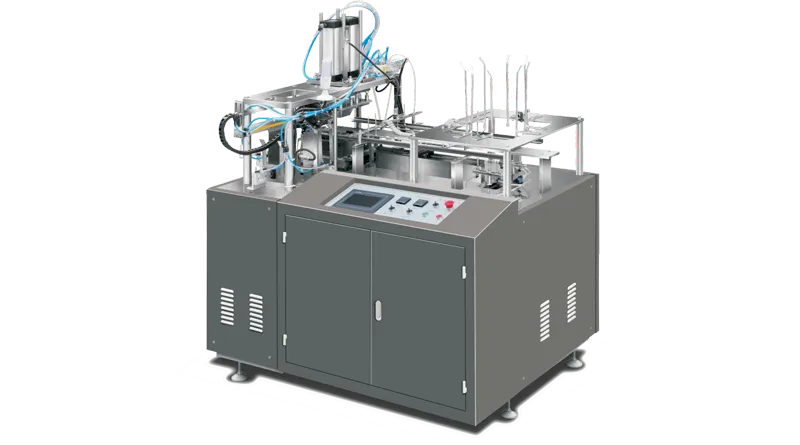
Blunt or chipped cutting dies, worn creasing rules, and deformed glue nozzles are the silent waste multipliers. A slightly dull die cutting edge doesn’t stop the machine; it just tears the bottom liner microscopically, producing blanks that look acceptable but crack open under compression in the case packer. By that point, the entire batch is suspect.
Leading converters are now adopting condition-based tooling maintenance. Accelerometers on the die-cutter beam capture the vibration signature of each stroke; a learning algorithm compares it against a healthy baseline and flags when the cutting force spikes — a clear indicator that the die needs sharpening. Similarly, thermal cameras pointed at glue nozzles detect cool spots from partial clogging long before the gluer starts skipping beads.
The payback is twofold: fewer sudden tooling failures that generate lines of scrap during an unscheduled stop, and consistently high-quality output that avoids piece-by-piece rework downstream. Industry data compiled by the European Federation of Corrugated Board Manufacturers (FEFCO) suggests that predictive tooling maintenance alone can trim 1.2% to 2.5% off a plant’s annual board consumption.
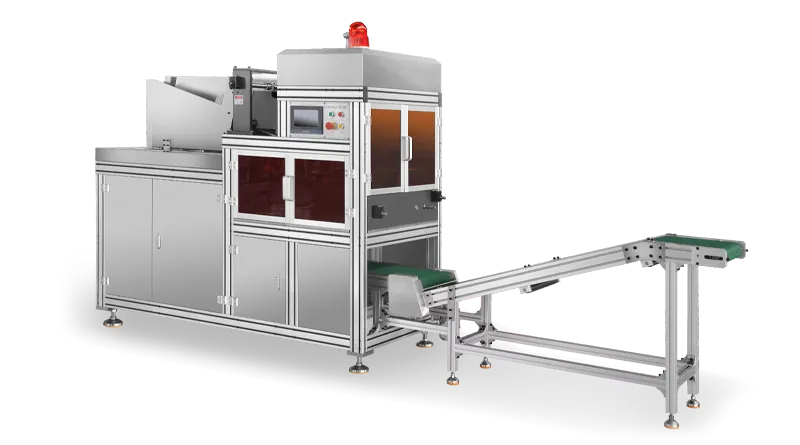
If you’re considering how condition monitoring can slot into your current setup, it’s worth examining converting lines that ship with native IIoT sensors rather than relying solely on aftermarket bolt-ons.
Reducing process waste is rarely about a single, silver-bullet machine upgrade. It’s about sequencing improvements so each one amplifies the next:
Start by mapping your waste stream for two full shifts and ranking scrap sources by value (not just weight).
First, tighten registration and setup scrap — these yield fast, visible wins.
Then, layer in inline inspection to stop post-process culling and gather the data you’ll need to justify tooling investments.
Finally, wrap it all with predictive maintenance so your scrap rate doesn’t drift upward between annual tooling checks.
Converter case studies consistently show that a phased, data-driven plan can push total process scrap from the 9–12% range to a sustainable 2.8–3.5%, often with a total payback period under 18 months.
The practices described above — closed-loop registration, adaptive creasing, inline defect ejection, predictive tooling — are all enabled by converting equipment that treats waste prevention as a core engineering requirement, not an aftermarket add-on. When a line is designed from the ground up with high-speed synchronization, sensor fusion, and modular automation, the daily ritual of carting off reject pallets gradually disappears.
If you’re targeting a step-change in material yield rather than marginal improvements, Forbona’s approach to integrated carton production may offer a practical path to consistently low scrap rates without sacrificing throughput. Their platform is built around the principle that every sheet that enters the line should exit as a saleable carton — and the data feedback loops to prove it.
References and disclaimer: Waste statistics cited are drawn from publicly available Smithers converting industry briefs, FEFCO operational benchmarks, and anonymized data shared by packaging converters at industry technical conferences. Specific figures related to individual plants are illustrative of achievable outcomes and will vary based on substrate, machine configuration, and operating conditions.

Key node quality report push
Equipment performance test report
Old equipment upgrading program
Lifetime technical support
Professional engineers 1 to 1 program design