It’s a quiet crisis that eats into margins every single day: a packaging line that runs just a little too slow, a batch of rigid boxes with a slightly higher scrap rate than last month, or a critical machine that faults during the night shift. Individually, each hiccup seems manageable. Together, they form a persistent drain on profitability that many converters accept as “the cost of doing business.” But the most successful packaging manufacturers know that operational costs are not a fixed destiny. With a systematic approach, it is possible to carve out 15–25% of unnecessary spending—without cutting corners on quality or pushing operators to the breaking point.
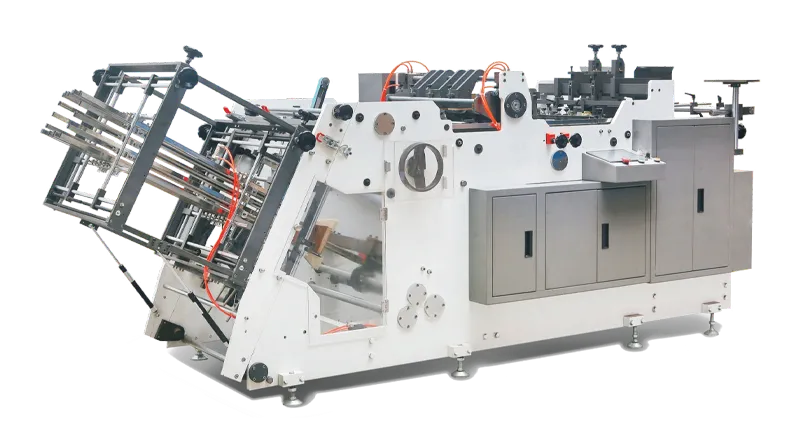
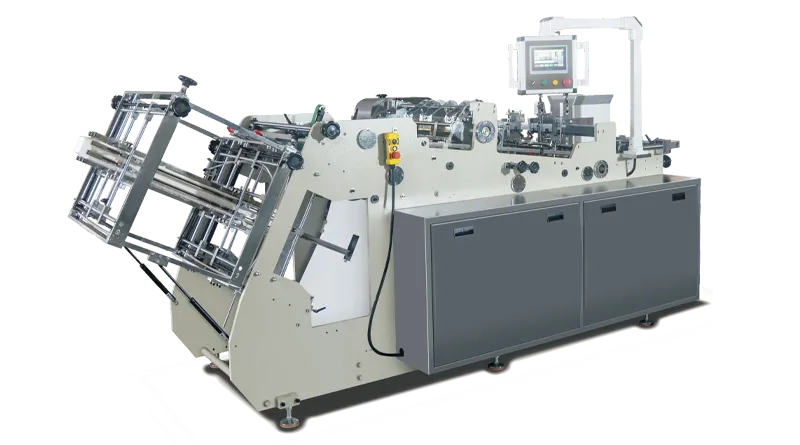
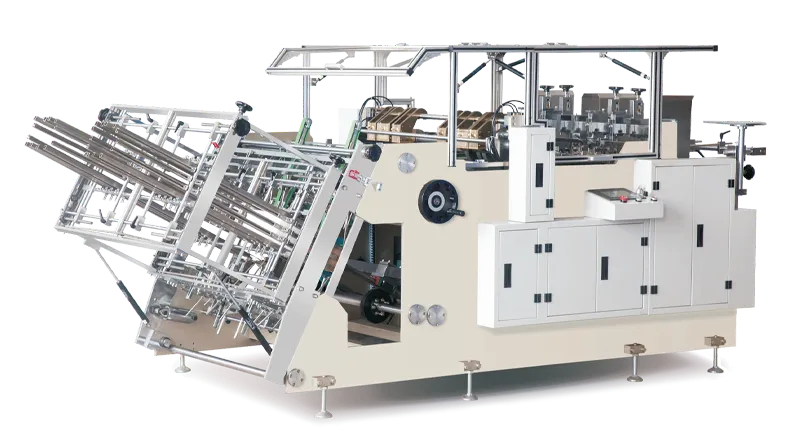
Before diving into the fixes, let’s be honest about where the money goes. When we walk the floor of a typical folding carton or rigid box plant, the same cost centers appear again and again: material waste due to inconsistent forming, energy bills from outdated motor systems, unplanned downtime that cascades through delivery schedules, and the hidden cost of excessive manual intervention. One packaging engineer recently told us that his semi-automatic line required three operators just to handle misaligned blanks—a job a well-designed automated process could handle with sensors and servo adjustments. The first step in cutting costs is recognizing that your core forming and joining technologies set the baseline for everything else. If you are running equipment that was designed a decade ago with limited connectivity, you are leaving money on the table. Many operations are now upgrading their lines with modern automated rigid box forming systems that fundamentally rewrite the cost-per-box equation.
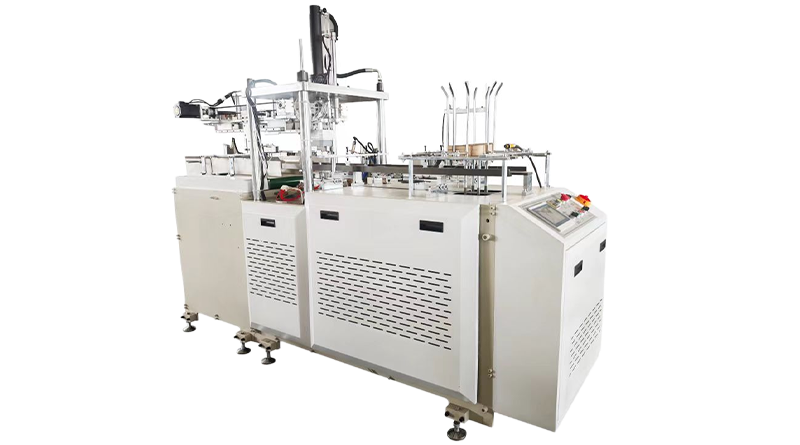
Most cost-cutting initiatives fail because they treat symptoms. Managers see high scrap and demand tighter inspection. They see downtime and stock up on spare parts. But a root cause analysis often reveals a different picture: the machine itself is incapable of holding the required tolerance during high-speed runs, or changeovers are so complex that operators waste 45 minutes on every job switch. According to a PMMI Business Intelligence report, packaging lines operating with legacy, purely mechanical setups experience an average Overall Equipment Effectiveness (OEE) of only 55–60%. In contrast, lines built around servomotor-controlled, data-ready machinery regularly exceed 75% OEE. That gap isn’t just a number; it represents thousands of hours of lost production and tons of wasted board every year. When a paper box making machine runs without active process monitoring, small deviations in glue application or folding pressure accumulate until the entire batch is compromised. The cost is not only the board you throw away but also the energy consumed, the labor spent, and the delivery penalty you might face.
*Lever 1: Move from reactive to condition-based maintenance*
The most expensive maintenance call is the one you didn’t schedule. Unplanned downtime in the packaging sector can cost anywhere from $2,000 to $15,000 per hour depending on your throughput and the downstream implications. Yet many plants still rely on calendar-based preventive maintenance or, worse, run-to-failure. Installing vibration sensors, thermal cameras, and current monitors on key assemblies—glue tanks, forming plungers, servo drives—allows you to detect bearing wear or belt slippage weeks before a breakdown. One rigid box manufacturer we worked with reduced unscheduled stoppages by 38% within six months simply by adding vibration analysis to their pressing stations. They now plan interventions during natural shift changes, avoiding production loss entirely.
Lever 2: Slash energy consumption at the machine level
Energy is often treated as a fixed overhead, but it shouldn’t be. Industrial electric motors account for roughly 70% of a plant’s electricity use, according to the U.S. Department of Energy. Replacing older AC motors with IE4-class servo motors and integrating variable frequency drives can reduce the energy consumption of a single forming station by 20–30%. Beyond the motor, look at heating elements for glue systems and curing zones. A closed-loop temperature control that modulates power based on real-time demand prevents overheating and wasted kilowatt-hours. One client we advised saw a 17% drop in their monthly electricity bill after retrofitting their main production line with intelligent power management modules. That saving alone delivered a return on investment in under 14 months.
Lever 3: Reduce changeover time to unlock hidden capacity
Every minute spent on changeover is a minute of no revenue. On a typical die-cutting, forming, and gluing line, a changeover from a jewelry box format to a larger electronics box might take 30–40 minutes if it involves manual position adjustments, screw turnings, and trial-and-error passes. A key feature of today’s advanced rigid box forming technology is recipe-driven automatic setup. Servo axes move to preprogrammed positions at the touch of a button. Motorized guides adjust themselves. The result: changeover times under 8 minutes. That translates directly into the ability to run more short-run orders profitably, something increasingly demanded by e-commerce and boutique brands. It also means your operators spend less time turning wrenches and more time monitoring quality.
*Lever 4: Minimize material waste through closed-loop control*
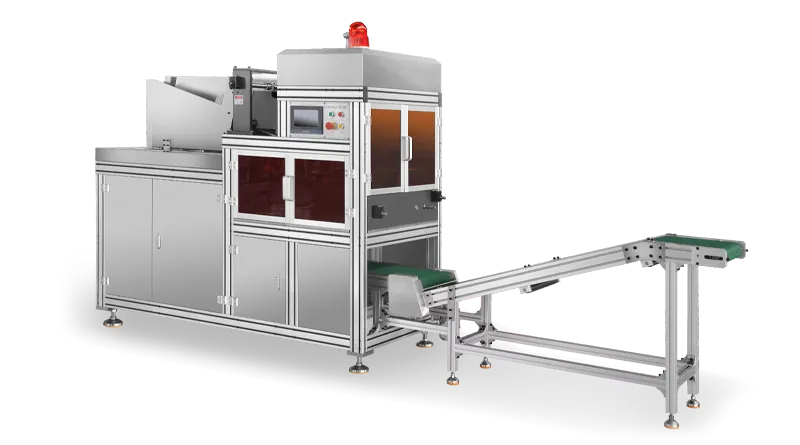
Board is your single largest variable cost. A 5% scrap rate on a line producing 50,000 boxes a day means 2,500 boxes’ worth of material going straight to the recycling baler. You paid for that board, you paid for the energy to process it, and now you pay to handle the waste. Many waste sources are concentrated in the forming and gluing stages: a box that is slightly out of square, a lid that doesn’t align, a glue squeeze-out that mars the print. Selecting a paper box making machine equipped with vision alignment and automatic reject gates can catch defects early and correct the process in real time. Instead of scrapping an entire run after the fact, you stop the bleeding after a few boxes. One corrugated specialty plant cut its annual board waste by 29% simply by introducing active alignment control and inline quality cameras.
Equipment alone won’t deliver sustained savings; your team’s daily habits matter just as much. Establish simple standard operating procedures for startup, shutdown, and cleaning. Use visual management boards to display real-time OEE data so everyone on the line understands the immediate impact of a slowdown or scrap event. Train operators not just in “button pushing” but in interpreting the data their machines generate. When an operator feels ownership over performance metrics, small improvements compound quickly. One enterprising crew at a folding carton plant started a weekly “waste walk” where they inspected the scrap bin for patterns—and discovered that a subtle misalignment in the feeder was causing repeated corner damage. Fixing it took 15 minutes and saved an estimated $18,000 a year.
It’s easy to feel overwhelmed by the scope of possible improvements, but the most effective approach is incremental. Start by benchmarking your current state: measure your OEE, your energy consumption per thousand boxes, your average changeover time, and your material yield. Pick one lever—say, reducing changeover time—and test a solution on a single line. Once you have proven results, expand. As you scale, the conversation naturally turns to capital equipment upgrades. When evaluating new machinery, look beyond the purchase price and calculate the total cost of ownership over 7–10 years. Factor in energy savings, maintenance contract costs, expected scrap reduction, and the value of increased capacity. It is often the case that a slightly higher upfront investment in a precision-engineered rigid box production system pays back several times over in operational savings.
If you are ready to explore how modern, efficiency-focused equipment can reshape your cost structure, the team at Forbona has assembled a range of solutions that embed many of the principles discussed above—servo-controlled motion, condition monitoring readiness, and rapid changeover logic—directly into the machine platform. Discover Forbona’s integrated box-making systems and see how they are helping converters reduce per-box costs in a measurable, sustainable way.
Disclaimer: The strategies shared in this article are based on general industry practices and case study insights. Results may vary depending on your specific machinery, materials, and operational context. Always consult a qualified engineering professional before implementing modifications to your production equipment.

Key node quality report push
Equipment performance test report
Old equipment upgrading program
Lifetime technical support
Professional engineers 1 to 1 program design