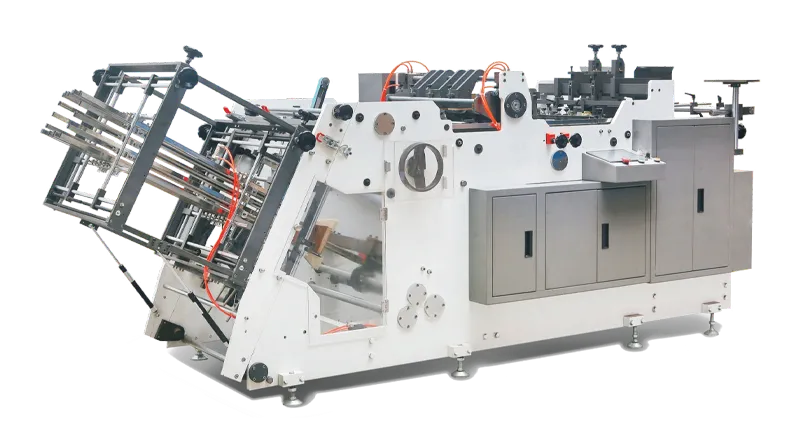
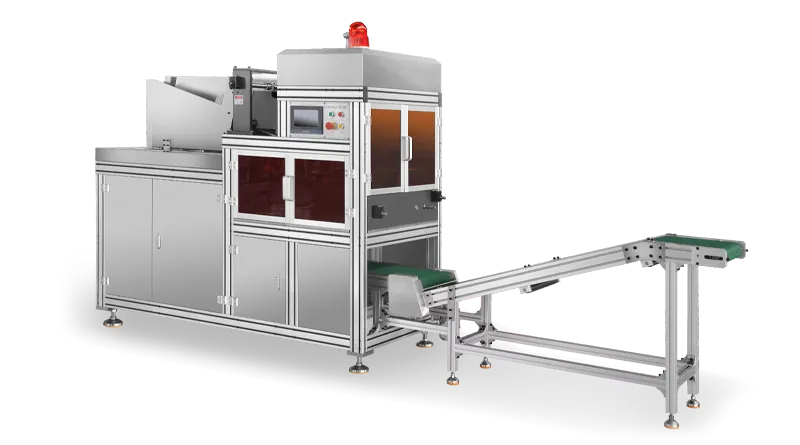
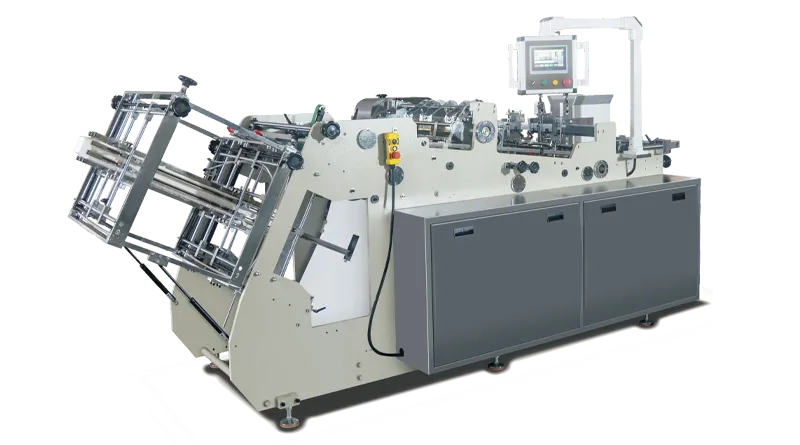
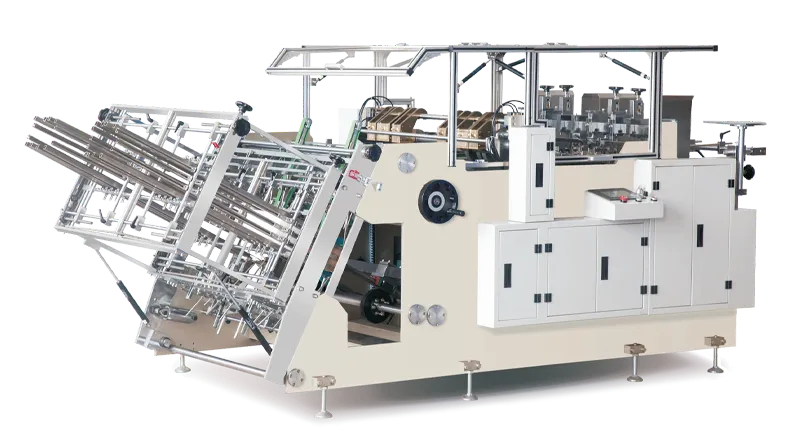
Every packaging plant manager knows the sound — the sudden clunk, the screech of misaligned guides, followed by that stomach-churning silence when a line stops dead. On a rigid box line running 40 units per minute, a single hour of downtime doesn’t just eat into margins; it dismantles delivery promises painstakingly built over months. Yet when we trace these disruptions to their roots, they rarely start with operator error. They start with design decisions made long before the equipment ever touches concrete. The question then isn’t “how fast does it run?” but rather “what keeps it running consistently across shifts?”
That shift in perspective changes how we evaluate capital equipment. Instead of fixating on cycle rate brochures, smart buyers begin dissecting the structural, kinematic, and control architecture that separates a line that needs constant nursing from one that hums through three shifts with minimal intervention. This article walks through those often-overlooked engineering differentiators, so your next investment decision is built on physics, not sales decks.
Most stability problems don’t originate in the fast-moving servo axes. They originate in the slow, invisible elastic deformation of the machine frame under cyclic loads. When a forming plunger presses a rigid board into a cavity at 35 strokes per minute, the reaction force doesn’t just travel through the tooling — it sends a shock wave back into the welded steel structure. If that structure lacks mass, damping, or triangulation, it resonates. That resonance translates directly into inconsistent forming depths, edge scuffing, and glue joint gaps that QA catches three stations too late.
Look for frames designed around a fully welded, stress-relieved monolithic base, preferably normalized after welding. Box-section cross members with internal ribbing beat I-beam or C-channel constructions for torsional rigidity. Some manufacturers now use finite element analysis to identify harmonic hot spots and add tuned mass dampers — a trick borrowed from high-speed printing presses. Before you even look at the spec sheet for a carton forming system, ask to see the frame casting or weldment drawings. The stability ceiling is set there, in the metallurgy and geometry, not in the PLC cabinet.
After the frame, the sheet feeder is the single largest contributor to long-term cycle repeatability — and the most common point of failure in high-volume paper box production. Friction feeders using simple top-vacuum pick-off work for homogenous, flat stock. But the moment you introduce warped boards, micro-curl from lamination, or electrostatic adhesion from synthetic coatings, that simplicity falls apart.
The engineering solution that separates truly stable equipment is multi-stage separation with active air-knife assist and mechanically driven back-wedge separation — not just vacuum. This combination positively singulates even interleaved or statically charged sheets without double-feeding. Moreover, a non-contact double-sheet detection array (ultrasonic or laser-based, not simple mechanical micro-switches) provides a hard stop before a double-blank jams the forming station. Some advanced systems running high-mix rigid box formats incorporate 3D vision sensors at the feeder outfeed that measure each blank’s XY skew in real time and adjust the downstream registration nips. This feedback loop isn’t a luxury; it’s the difference between rejecting 2% of production and 0.2%. For operations handling luxury spirit packaging or electronics inserts where board stock costs are significant, that difference pays for the upgrade within a quarter. If you’re curious about how modern feeder architectures handle challenging materials, it’s worth exploring automated rigid box forming solutions that prioritize material flexibility over raw speed.
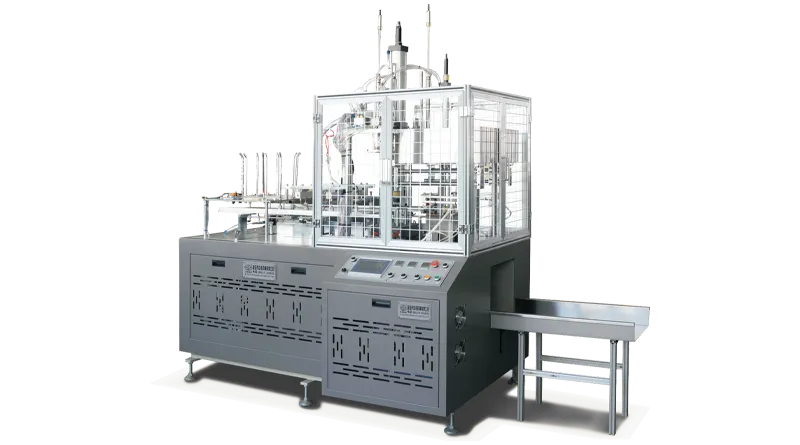
Walk into any trade show and you’ll hear claims about “high-speed servo forming.” Servo motors are commodity components now; what matters is how they’re mechanically coupled to the tooling. The difference between a stable forming station and one that slowly drifts out of spec over six hours comes down to guiding and constraint.
Rigid box forming involves wrapping paper or laminated board around a pre-cut substrate and bonding it under pressure. If the female cavity (the mold) has any micro-movement relative to the male plunger during the pressing stroke — caused by bearing clearance, thermal expansion of guide rods, or inadequate preloading — you’ll see glue squeeze-out on one edge and starvation on the other. The fix is over-constrained linear guidance: four guide posts with preloaded recirculating ball bushings, rather than two, combined with a central press platen guided by a massive ground leadscrew or hydraulic short-stroke cylinder with built-in position feedback. Over-constraint, normally anathema in machine design, is essential here because the forming force vector isn’t perfectly centered on every box format.
Another often-ignored factor is the tooling quick-change mechanism. Traditional bolt-on tooling invites alignment drift every time a changeover happens, because operators inevitably torque bolts slightly differently. Hydraulic or zero-point clamping systems that locate the tooling with repeatability under 0.02 mm TIR eliminate that variable. When you assess heavy-duty box forming equipment, checking for zero-point tooling interfaces rather than threaded fasteners tells you a lot about the manufacturer’s stability philosophy.
Modern machines bristle with sensors, but the real intelligence lies in how the control system uses that data stream. A reactive system logs a fault after a jam and stops the line. A stability-oriented system predicts the jam and nudges parameters proactively.
Consider the glue application sub-system. Hot-melt viscosity changes with ambient temperature, bead charring in the heated hose, and batch-to-batch adhesive variations. A simple PID temperature loop on the tank won’t prevent glue stringing or nozzle clogging. What’s needed is closed-loop flow control: a positive-displacement gear pump whose speed is continuously adjusted based on a real-time flow meter reading, maintaining volumetric output regardless of viscosity drift. When the control system detects rising pump torque — a leading indicator of impending clogging — it can trigger an automatic purge cycle during a scheduled gap, not during a production run. This is the kind of adaptive control found in high-end automatic box production lines, and it directly slashes micro-stops that sap 15–20% of nominal OEE in less sophisticated equipment.
Edge computing modules now enable this without an expensive MES overlay. The machine controller runs anomaly detection algorithms trained on historical cycle data, flagging gradual shifts in station synchronization timing — a sticky pneumatic cylinder on a folder plate, for instance — weeks before a hard failure. Maintenance goes from firefighting to planned. To understand the full spectrum of advanced motion control systems available, you’ll want to look beyond the HMI screens and into the control architecture that handles such predictive logic.
Between the feeder, former, folder-gluer, and delivery stacker, the substrates move through a series of transfers. Each transfer is an opportunity for micro-registration loss. The most stable machines eliminate intermediate transfers wherever possible by integrating operations into a single continuous tooling set. Where transfers are unavoidable, mechanical cam-driven transfer arms or linear motor shuttles with absolute encoder feedback maintain spatial registration, never relying on friction belts alone, which can slip when board thickness changes or when glue mist condenses on belt surfaces.
Non-contact sheet stabilization during transfer — using controlled vacuum belts or Bernoulli-effect air bars that hold the board against a reference edge without touching the printed surface — prevents scuffing and keeps the blank precisely positioned. These seemingly minor details add up to the difference between a machine that needs constant fine-tuning and one that can produce stable rigid boxes across an entire shift without human adjustment. If you’re ready to move from a maintenance-heavy setup to one that prioritizes uptime, discover Forbona’s precision box making systems built around these transfer-integrity principles.
So how do you verify these claims before a machine ships? A factory acceptance test (FAT) that only runs your easiest SKU for two hours tells you nothing. You need a multi-SKU, worst-case-board-condition test that lasts at least eight hours — a full shift. Measure the mean time between intervention (MTBI), not just cycle speed. Ask the manufacturer to mount accelerometers on the frame near key bearing housings and share the vibration spectra; any peak above ISO 10816-3 machinery vibration severity limits for its class should be addressed with a structural fix, not a software filter.
Second, request the critical spare parts list and compare it with the BOM of the motion components. A company that can’t tell you the expected L10 bearing life for their main press guides probably didn’t design the machine to a reliability target. Stability isn’t magic; it’s designed in and verifiable. Those rigorous standards are exactly what the most demanding packaging converters look for when selecting a paper box making machine supplier — and they are increasingly documented in transparent technical proposals.
The difference between a machine that merely runs and one that runs dependably lies in the willingness of the builder to sweat the structural, kinematic, and control details that never make it into glossy brochures. By focusing on frame rigidity, feeder singulation reliability, forming constraint geometry, predictive control intelligence, and transfer integrity, you equip yourself to ask the questions that separate engineered stability from marketed speed. The best investment is the one that keeps making boxes while you’re focused on growing your business — not troubleshooting the line.

Key node quality report push
Equipment performance test report
Old equipment upgrading program
Lifetime technical support
Professional engineers 1 to 1 program design