It’s Monday morning, and the packaging line is already behind schedule. Three temporary workers are struggling to keep up, manually folding and taping corrugated cartons while the filling station waits idle. Blisters on thumbs, inconsistent glue patterns, and a growing pile of collapsed boxes that don’t quite meet dimensional specs — this is the daily reality for many small-to-mid-size packagers who still rely on hand-erecting. The real cost isn't just the hourly wage; it’s the invisible tax of lost throughput, rework, and late shipments.
So why does a seemingly straightforward task turn into a production choke point? The root cause isn’t a lack of effort; it’s the inherent physical limits of manual forming. A seasoned operator may manage five to six cartons per minute over a short burst, but fatigue, repetitive strain, and the need for consistency quickly drag that number down. Moreover, when every carton depends on a human touch, variation is unavoidable — a side seam that is off by a few millimeters today becomes a jam in the case packer tomorrow, triggering micro-stoppages that eat away at overall equipment effectiveness.
Beyond sheer speed, there are three less obvious reasons manual erecting caps throughput. First, ergonomics and injury risk: the repetitive motion of folding and taping is a known contributor to musculoskeletal disorders, leading to high absenteeism and turnover. Second, dimensional creep: without rigid forming guides, the open carton dimensions vary, causing problems for downstream automated packing or palletizing. Third, material waste: misfolds, crushed fluting, and over-applied hot melt all translate into higher consumable costs per shipped unit.
According to a 2023 packaging labor productivity survey by PMMI, companies that shifted from manual to automated carton forming reported a median 28% reduction in packaging material waste and a 40% decrease in line stoppages attributed to carton quality issues. Yet many manufacturers hesitate, assuming that automation is only for mega-plants running millions of units a year. That assumption is increasingly wrong.
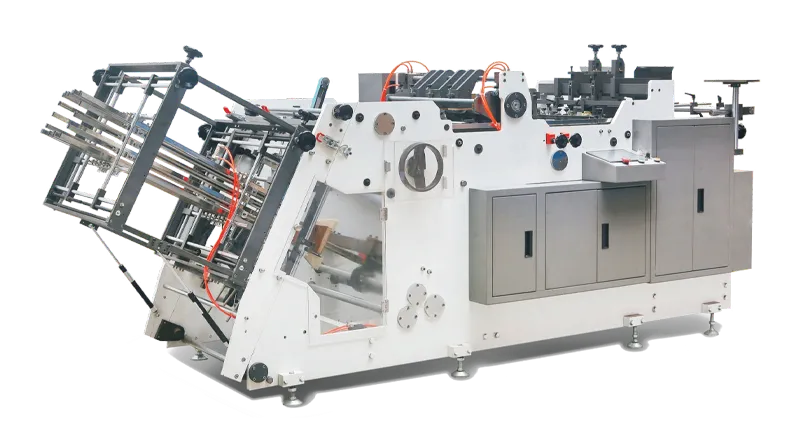
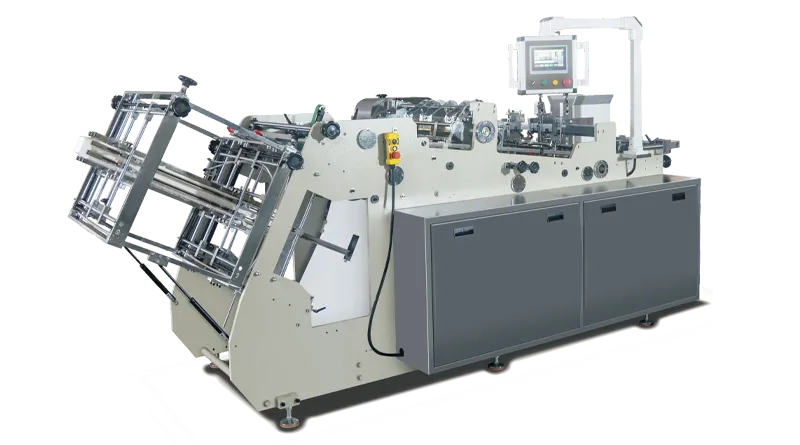
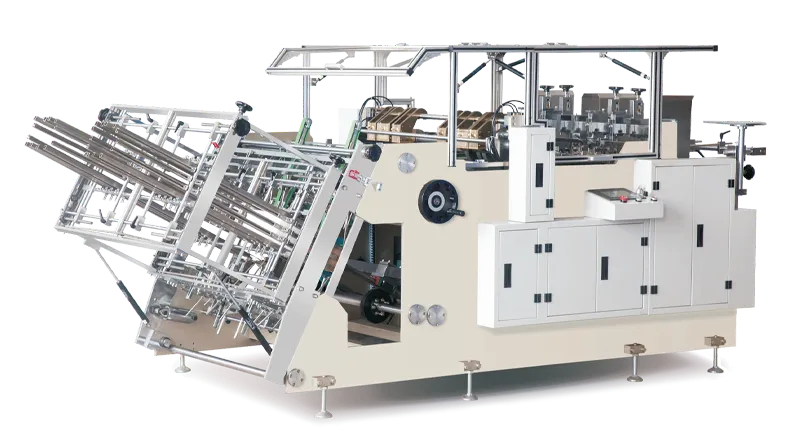
An automated carton erecting and forming system works by pulling flat blanks from a magazine, precisely folding the panels, securing the bottom flaps — usually with hot melt adhesive or tape — and discharging a squared, ready-to-fill carton, all in a continuous cycle. The real impact on production doesn't just come from raw speed, but from how that speed propagates through the line.
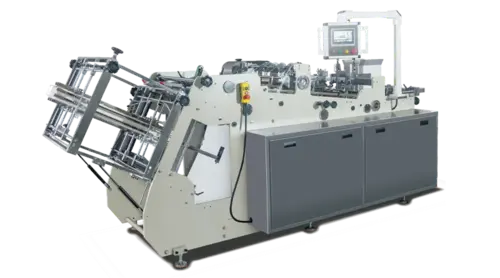
Consider the cascading effects: a machine capable of 15–20 cartons per minute doesn’t just replace three or four workers; it delivers uniform box geometry that eliminates downstream jams. It enables a steady carton supply to the filling station, so the filler never starves. It allows the line supervisor to redeploy labor to value-adding tasks like quality inspection or changeover preparation instead of emergency firefighting. And because modern servo-driven systems offer recipe-based changeovers, switching from a 300x200x150 mm carton to a 400x300x200 mm one can happen in under three minutes — without a single mechanical adjustment by the operator. Those accumulated minutes across shifts are where the real production gain lives.
One less obvious but powerful boost comes from integration with your existing line control. Many advanced automated carton forming systems can communicate via Ethernet/IP or Modbus, synchronizing speed with the rest of the line. When the filling machine slows down, the erector automatically matches the pace; when a downstream jam clears, it surges to refill the buffer. This dynamic pacing keeps the whole line in harmony, preventing the erratic start-stop cycles that wear out mechanical components and frustrate operators.
Not all automated erectors are built for the same job. Selecting the right one involves looking beyond the headline “cartons per minute.” Here are four dimensions that determine whether a system will genuinely boost your production or become another bottleneck.
Carton style and size range. Are you running regular slotted containers, half-slotted, or die-cut specialty boxes? Does the machine accommodate the full breadth of your SKU mix without requiring extensive change parts? If 80% of your volume is one box style, a dedicated machine makes sense. If you run 20 different sizes a day, look for a system with quick-change mandrels and automatic size adjustments. The wider the range without manual intervention, the fewer changeover gaps eat into your availability.
Forming and sealing method. Hot melt adhesive provides strong bonding and is ideal for heavier contents, but it requires warm-up time and periodic nozzle maintenance. Pressure-sensitive tape is cleaner and instantly ready, but may add material cost and isn’t always suitable for cold storage environments. The best machines give you a choice or a hybrid configuration, letting you match the method to the product and distribution environment.
Speed and surge capacity. Don’t buy for average rate; buy for the worst-case surge. If your filling line occasionally runs 20% above nominal speed to catch up, the erector must handle that burst without jamming. A machine with a servo-driven main drive and overload protection can absorb brief speed spikes, while a purely mechanically cam-driven unit might falter.
Serviceability and support. A machine that is cheap to buy but requires a specialized technician for every hiccup will erode your gains. Look for accessible electrical cabinets, tool-less change parts, and clear diagnostic screens. Also, evaluate the supplier's remote support capability and spare parts availability. If you want to compare configuration options for different production scales, you can find detailed data sheets and video demonstrations that make the differences concrete.
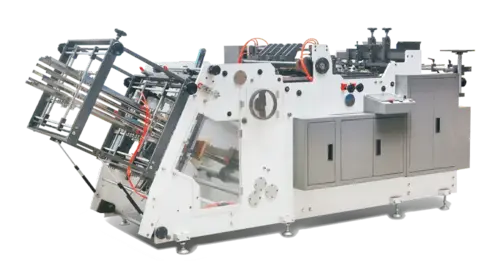
A mid-sized contract packager I worked with recorded every line stop caused by a poorly formed carton over 30 days. The result: 114 micro-stoppages, each lasting 90 seconds on average. That’s almost three full hours of lost production per month just from cartons that wouldn’t square up or whose bottom flaps pulled open. After installing an automated erector with precise flap folding and controlled adhesive application, those carton-related stops dropped to 7 per month. The packaging line’s overall throughput rose by 18%, not because the filler ran any faster, but because it simply ran uninterrupted for longer stretches. This is the kind of gain that a paper box making machine can deliver when applied to the right bottleneck — it’s rarely about headline speed alone.
Even the most robust machine loses its production-boosting effect without a few disciplined routines. First, clean the adhesive applicator daily. Charred adhesive residue is the number one cause of nozzle clogs and inconsistent bonding, which in turn leads to carton failures downstream. Second, check the vacuum cups and suction system weekly. Flat blank picking relies on vacuum integrity; a cracked cup or a dirty filter reduces pick reliability and forces the machine into fault-recovery cycles. Third, verify dimensional accuracy monthly. Measure a sample of 20 cartons against your spec — if the diagonal variance exceeds 2 mm, it is time to inspect mandrel alignment and fold guides.
According to ISO 17396 for packaging machinery safety, regular validation of forming geometry is also part of maintaining a safe operating envelope, as an out-of-square box can behave unpredictably in downstream accumulation sections.
If your current packaging line rhythm is dictated by the stamina of a manual carton forming crew, you are leaving production capacity on the table — often 15–30% by most industry estimates. The decision to automate is less about eliminating jobs and more about reconfiguring your line so that human attention goes where it creates the most value: supervising multiple machines, ensuring quality, and orchestrating fast changeovers.
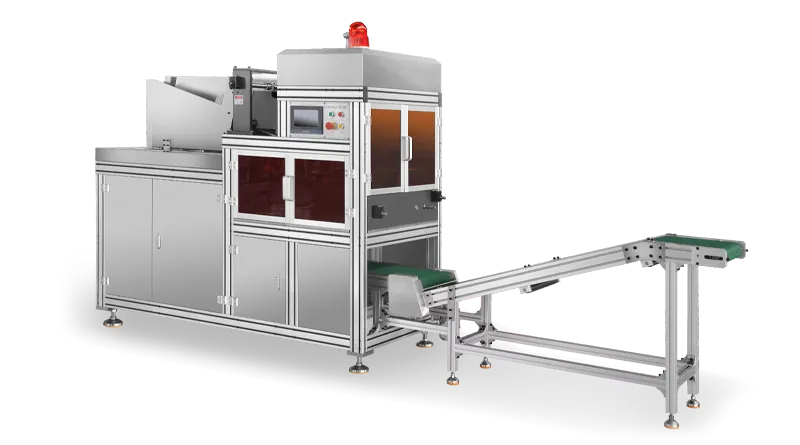
For packagers who want to see what a production-oriented automated solution looks like, Forbona’s carton erecting equipment brings together quick size changeovers, servo-driven precision, and a control architecture that talks to your existing line. The company’s engineering team focuses on matching the machine’s duty cycle to real-world production demands, not just catalog specifications. If you are evaluating whether automated forming fits your operation, it might be worth starting with a throughput audit — mapping where your line truly loses time — and then exploring hardware that addresses those specific gaps. After all, a paper box making machine is only as impactful as the bottleneck it removes. Choosing a system that fits your carton mix and line layout is what transforms a capital purchase into a sustained boost in production.

Key node quality report push
Equipment performance test report
Old equipment upgrading program
Lifetime technical support
Professional engineers 1 to 1 program design