It’s 10:47 a.m. on a Tuesday in a midsize print finishing plant, and the production manager is holding a half-scorched rigid box corner. The smell of burnt paper and adhesives hangs in the air zone near the aging wrapping machine. This isn’t a breakdown—it’s a daily calibration sacrifice. The old hydraulic system over-dries the wheat starch glue on the first five runs until the thermal oil reaches a steady state. The wasted material isn't just the board; it’s the 20 minutes of downtime, the energy surge, and the silent erosion of margins.
If you think material costs are high now, wait until you audit the hidden toll of your startup waste. We’re seeing a procurement shift that isn’t just about kWh rates or labor shortages. It’s about the raw physics of how a box is formed, and why the old way is quietly bankrupting the short-run luxury sector.
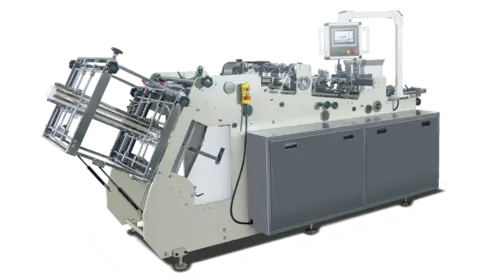
To understand why ecru and kraft packaging is suddenly dominating luxury unboxing videos, you have to look at the glue line. Traditional rigid box machinery (the kind built like a tank from the 90s) relies on a wetting process. Water-based adhesives require a specific dwell time and temperature curve.
According to a 2025 flexo packaging waste audit published by the Paper & Packaging Board, moisture-related deformity accounts for up to 7% of total material rejection in poorly maintained wet-wrap lines. But the industry is moving fast. The trend isn’t just "going green" to save the planet; it’s going "cold press" to save the run.
The Three Technical Tripwires:
Adhesive Migration: In classic wrapping, humidity migrates into the greyboard substrate, causing expansion. When the board dries, it contracts and wraps to the paper side, creating the dreaded "concave lid."
Curing Bottlenecks: You can’t just speed up the conveyor without risking mold in the fluting.
Cleanup Complexity: Water-based glue cleanup requires solvent-free detergents and high-volume water washing stations, adding hours of mechanical cleaning per week.
Here is where the market is making a fascinating pivot. High-end cosmetic startups and subscription box curators are demanding zero-waste certifications. You can’t achieve zero-waste if your startup sequence trashes 10 sheets.
Modern on-demand forming technology uses a different philosophy: pressure over heat. Instead of boiling water out of the glue, these systems apply precise, uniform pressure to bond pre-coated ecru materials.
I spoke with a process engineer at a midwestern fulfillment center last month who detailed a fascinating metric: Forming Pressure Uniformity (FPU). "If your platen pressure varies by more than 3% across the B1 format," he noted, referencing the wide-format rigid B1 size, "you’ll see micro-delamination on the edges six hours later. The customer puts a heavy candle in the box, and the corner splits." This is a nuance you won’t find in a glossy brochure. It’s a floor-level reality.
Why choose to invest now, especially with equipment lead times stabilizing? Because the RFQs we’re seeing from luxury electronics and spirits brands have a new line item: "recoverable substrates." They don’t want the box crushed; they want it deconstructed.
A magnetic flip-top box made with a traditional hot-melt process is a recycling nightmare. The magnets rust out in the hydrapulper, and the hot melt sticks to the screens. The ecru shift demands spots that reject hot melt entirely, relying purely on fold-lock mechanics and interlocking tabs.
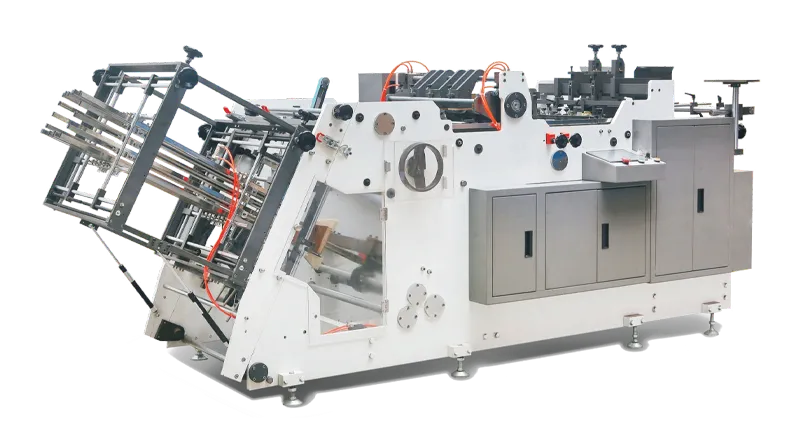
This changes the entire job spec for a converting machine. You aren’t just buying a "glue applier" anymore. You’re buying a precision folding engine that can handle 2mm greyboard with embossed paper without cracking the fibers on the fold line.
Case in point: A well-known Italian fashion house recently switched its packaging specs to eliminate all petroleum-based adhesives. Their tier-one suppliers had to retrofit lines with scoring stations that pre-break the fibers at a 90-degree angle. Those who couldn’t adapt lost the contract. This isn’t a theory; it’s a supply chain requirement.
If you read the spec sheets from the Frankfurt trade shows, everyone screams about pieces-per-minute. But if you’re running batches of 500 for a limited-edition sneaker drop, you don’t care about max speed. You care about how fast you can switch from a shoebox to a drawer box without a civil engineer on standby.
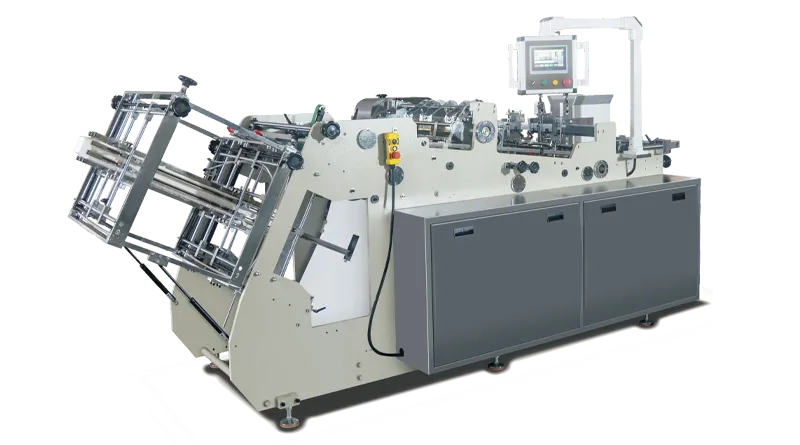
The biggest advancement in the last 12 months has been the elimination of the master ruler. Old machines require a mechanical master ruler for size changes; swapping it is like setting the timing on a vintage car. New serv0-driven systems allow you to recall the recipe from the internal memory. You punch in the length, width, and height, and the back-gauge and squaring plates zoom to position. The downtime between jobs drops from 45 minutes to under 90 seconds.
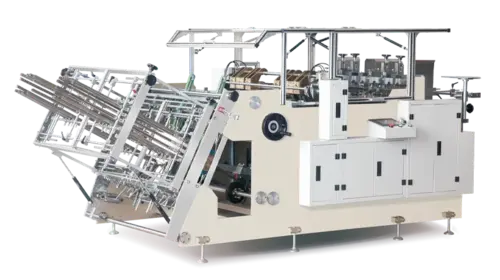
If you’re looking to break free from the constant firefighting of short runs, exploring a configuration that prioritizes recipe management might be the logical next step. You can view how recipe-driven configurations handle quick turnarounds in a production environment.
There is a trust gap in sustainable packaging. Brands buy expensive FSC-certified paper and then process it on a machine that leaks oil mist onto the substrate or requires a petrochemical-based blanket wash. True sustainable boxmaking aligns cleaning chemistry with substrate chemistry.
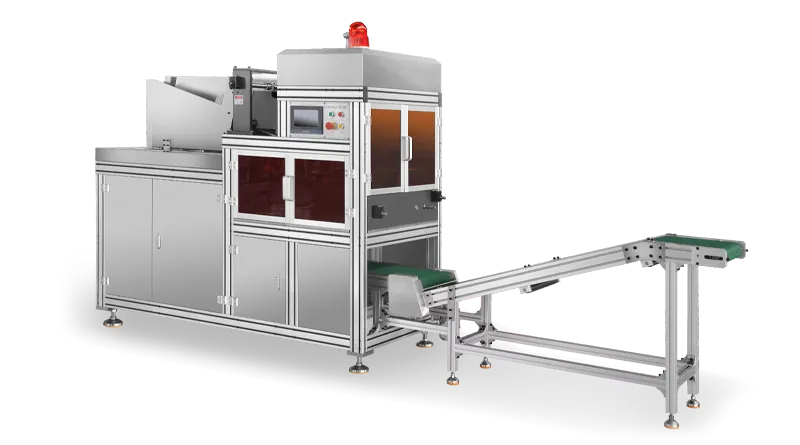
We’re observing a sharp rise in "dry cleaning" maintenance modalities. Vacuum extraction systems that pull paper dust and leather fibers from the cutting and pressing zones, rather than blowing them off with compressed air, which just aerosolizes the contaminants. This keeps the ecru board truly ecru, without a greasy film.
The transparent supply chain requires a transparent plant floor. A machine that logs energy consumption per job, waste ratio per operator, and dwell time lets you prove to your clients that their boxes were made correctly. This is where software bridges the gap between manual craftsmanship and digital accountability.
Don’t buy on a demo. Bring your worst material to the factory acceptance test. If your niche is recycled greyboard that’s 15% softer than virgin fiber, don’t test with a crisp, bleached board. If the forming pressure is calibrated for a stiff spring, it will crush your board. If it’s set for soft recycled material, it will leave a stiff virgin board loose.
The winners in packaging aren't fighting on basis weight or cents per sheet anymore. They’re fighting on structural design freedom. You need to get out of the wet zone and into a clean, repeatable mechanic.
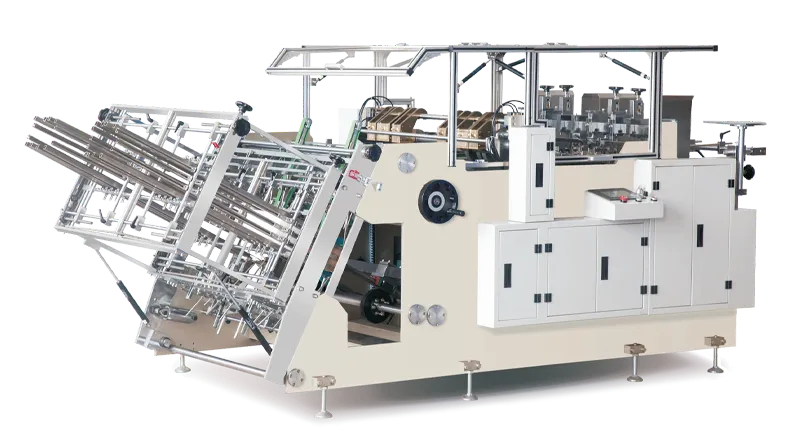
If you are moving toward light-assembly or on-demand packaging models where the end-user assembles the final pieces, you need a completely different tolerance class. For those ready to move beyond the limitations of chemical gluing, it makes sense to check out the specifications of current cold-forming models.
The ecru market is projected to grow by nearly 12% in the luxury rigid segment through 2028, according to Smithers. Yet, the available capacity for precision-formed, adhesive-free boxes is shrinking because the old machines can’t adapt. The status quo is a riskier bet than the new tech. The question isn't if the industry flips to sustainable forming—it’s whether your shop floor will be ready for the specs that RFQ requests.
If you want to see how these principles of waste reduction and rapid changeover translate into an actual production flow, it could be helpful to review the layout options for a fully integrated solution.

Key node quality report push
Equipment performance test report
Old equipment upgrading program
Lifetime technical support
Professional engineers 1 to 1 program design