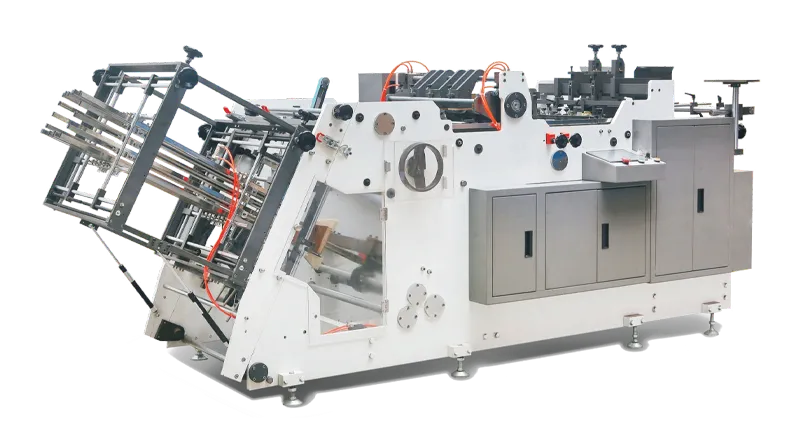
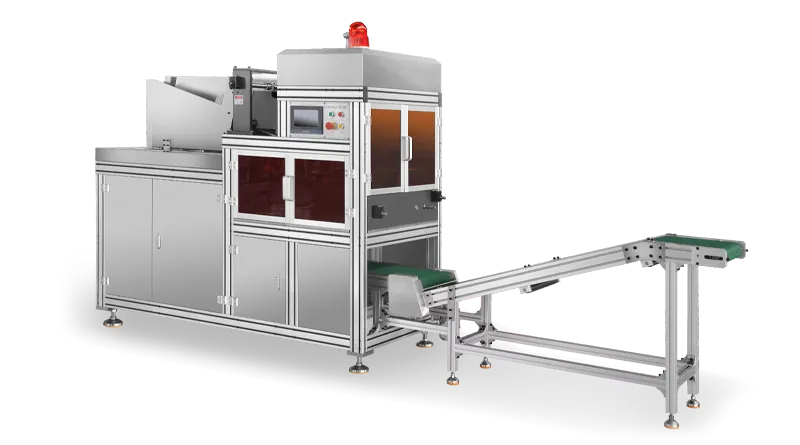
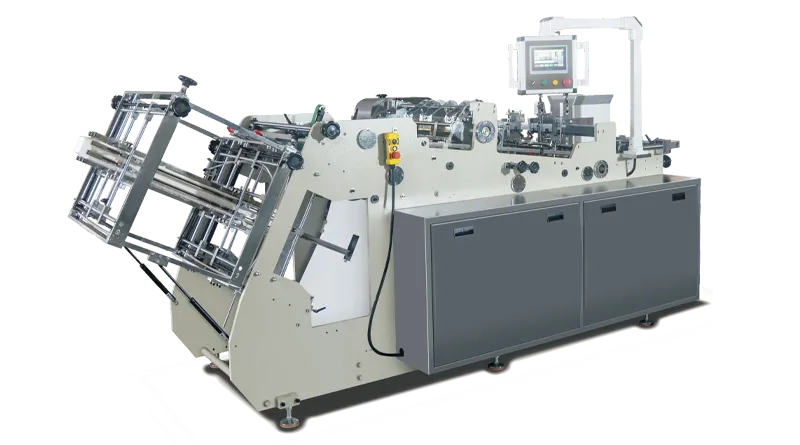
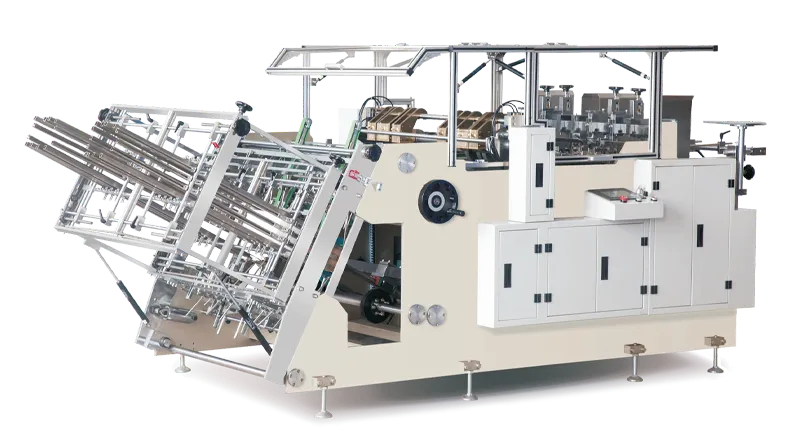
Selecting a fruit tray forming machine requires matching equipment capabilities to your specific produce type, packaging volume, and material requirements. The right machine should handle your paperboard specifications, deliver consistent output at your target speed, and support quick changeovers between different tray sizes. This guide walks through the key decision factors for produce packers evaluating automated tray forming equipment.
Fruit trays have distinct requirements that set them apart from ordinary paper boxes. Unlike standard shipping cartons, fruit trays must:
Provide adequate ventilation to prevent moisture buildup and spoilage
Support produce weight without collapsing during stacking
Meet food contact safety standards for direct produce contact
Accommodate varying fruit shapes and sizes from cherries to melons
Allow visual inspection of the produce without opening the package
These requirements directly influence machine selection—from the paperboard feeder design to the forming mold geometry and the gluing system specifications.
The paperboard you plan to use is the starting point for machine selection. Fruit trays typically use food-grade paperboard with specific thickness and coating requirements.
| Paperboard Parameter | Typical Range for Fruit Trays | Why It Matters |
|---|---|---|
| Thickness | 1–4 mm | Affects tray rigidity and stacking strength |
| Coating type | PE-coated, food-grade | Prevents moisture absorption from fresh produce |
| Grammage | 250–600 g/m² | Determines tray stiffness and produce support |
| Unfold size | Up to 800 × 800 mm | Matches tray dimensions to production needs |
When evaluating a machine, confirm that its feeder can handle your paperboard's thickness range without misfeeds or jamming. Machines designed for a wider thickness range offer greater flexibility if you plan to produce different tray styles.
Output capacity must align with your packaging line's throughput. Speed is typically measured in pieces per minute or pieces per hour.
| Production Scale | Recommended Output | Machine Examples |
|---|---|---|
| Small to medium | 25–35 pcs/min | Suitable for specialty fruit packers |
| Medium to large | 40–55 pcs/min | Balanced for most commercial operations |
| High volume | 1,500–3,300 pcs/h | For large-scale produce distributors |
Consider both peak season demand and average production volume. A machine that runs comfortably at 80% of its maximum speed will typically have better long-term reliability than one constantly pushed to its limit.
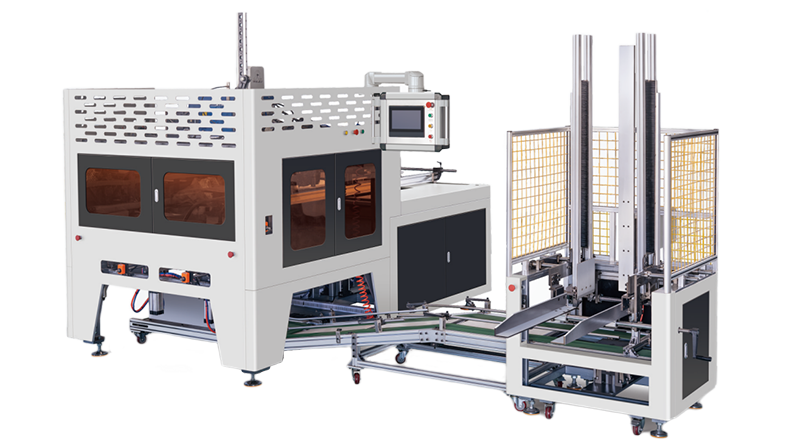
Fruit packers often handle multiple produce types and package sizes. The ability to switch between tray sizes quickly is a critical productivity factor.
Forbona's equipment features a mold changeover time of less than 5 minutes. This means:
Reduced downtime between production runs
Ability to respond to seasonal changes in fruit varieties
Small-batch production feasibility for specialty or premium products
When comparing machines, ask about the changeover process: Does it require special tools? How many personnel are needed? What is the typical time for a complete mold swap?
The automation level directly impacts labor requirements, consistency, and production scalability.
| Automation Level | Labor Requirement | Consistency | Best For |
|---|---|---|---|
| Manual forming | High | Variable | Very small operations, trial runs |
| Semi-automatic | Moderate | Good | Medium volumes, multiple SKUs |
| Fully automatic | Low | High | High-volume, consistent production |
Fully automatic machines with PLC and servo control systems offer the highest consistency and lowest labor dependency. For operations facing labor shortages or rising wage costs, the investment in full automation typically pays back through reduced headcount and fewer quality rejects.
The gluing system is a critical component that affects tray integrity and food safety. For fruit trays, the adhesive must:
Bond paperboard securely to prevent tray failure during handling
Meet food contact regulations if adhesive contacts produce
Operate cleanly to avoid contamination
Hot melt glue systems are common in fruit tray forming. The glue tank capacity affects runtime between refills—a 5L capacity is typical for medium-sized machines. Systems from reputable suppliers like VALCO MELTON (USA) offer reliable performance for food-grade applications.
Industrial space comes at a premium. Before selecting a machine, verify that its dimensions fit your production floor layout.
A typical mid-size fruit tray forming machine measures approximately 2585 × 1355 × 1995 mm (L×W×H). Consider:
Clearance for maintenance access around all sides
Material flow from paperboard storage to finished tray stacking
Integration with upstream and downstream equipment (e.g., tray denesters, filling lines)
Equipment must match your facility's utility capacities. Key specifications to verify include:
| Utility | Typical Requirement | Considerations |
|---|---|---|
| Power supply | 380V/50Hz (or customized) | Confirm with local utility |
| Total power | ~4.5 kW | May vary by configuration |
| Air supply | 0.6 MPa | Verify compressor capacity |
| Air consumption | 120–160 L/min | Factor into air system sizing |
Forbona supports voltage customization according to different country requirements—a useful feature for international buyers. Explore the fruit tray forming machine product line to review available configurations.
Mistake 1: Choosing based on speed alone
High speed means nothing if the machine cannot handle your paperboard or maintain consistent quality at that speed. Test actual output with your materials.
Mistake 2: Overlooking paperboard quality variability
Paperboard from different suppliers—or even different batches from the same supplier—can behave differently. A machine with adjustable feeder and forming parameters offers more resilience.
Mistake 3: Ignoring after-sales support
Packaging lines run on tight schedules. Downtime is expensive. Verify the supplier's service response time, spare parts availability, and technical support capabilities.
Mistake 4: Underestimating training requirements
Even the most automated machine requires proper operator training. Factor training time and ongoing skill development into your implementation plan.
Use this checklist when evaluating potential equipment suppliers:
Q: What paperboard thickness is suitable for fruit trays?
Most fruit trays use paperboard between 1 mm and 4 mm thick. The specific thickness depends on the weight of the fruit and the stacking height required. Heavier produce like apples or pears typically needs thicker board than lighter items like berries.
Q: Can one fruit tray forming machine produce different tray sizes?
Yes, through mold changes. Machines with quick-change mold systems can switch between tray sizes in minutes. This flexibility is valuable for packers handling multiple fruit varieties or seasonal packaging changes.
Q: What is the typical production speed for a fruit tray forming machine?
Speed varies by machine size and configuration. Mid-size machines typically produce 40–55 pieces per minute, while larger configurations may reach 1,500–3,300 pieces per hour. Actual output depends on tray complexity and paperboard characteristics.
Q: Do fruit tray forming machines require special food-grade certifications?
Equipment used for produce packaging should comply with food contact material regulations. Look for machines that use food-grade materials in contact surfaces and adhesives that meet relevant standards. Forbona's equipment is CE certified and uses FDA-compliant hot melt coating systems.
Q: How does paperboard quality affect fruit tray forming?
Paperboard quality directly impacts forming success. Inconsistent thickness, improper moisture content, or inadequate stiffness can cause misfeeds, poor folding, or weak tray joints. Always test your actual paperboard on the machine before committing to a purchase.
Q: What maintenance does a fruit tray forming machine require?
Regular maintenance includes cleaning the glue system, inspecting and lubricating moving parts, checking sensor alignment, and verifying air pressure settings. Establish a preventive maintenance schedule based on the manufacturer's recommendations and your actual production hours.
Choosing the right fruit tray forming machine starts with understanding your specific produce packaging requirements—paperboard type, production volume, tray variety, and facility constraints. The ideal machine balances speed, flexibility, and automation level while handling your materials reliably.
Avoid the common pitfalls of prioritizing speed over material compatibility or overlooking long-term support needs. Take the time to test your paperboard on prospective machines and verify that the equipment's specifications match your actual production conditions.
For a closer look at available configurations and technical specifications, review the fruit tray forming machine product line. Discussing your specific material and production requirements with the equipment supplier will help confirm that the chosen machine meets your needs.

Key node quality report push
Equipment performance test report
Old equipment upgrading program
Lifetime technical support
Professional engineers 1 to 1 program design